
-
 On this week’s Down the Road on the Blueridge Music Trail, Laura Boosinger takes us to the Union Grove Fiddlers Convention. What began as a school fundraiser in Union Grove grew into one of the South’s most influential fiddlers’ conventions. Laura traces the gathering’s early years, its role in preserving old-time music, and the community members who helped build its enduring legacy.
 -
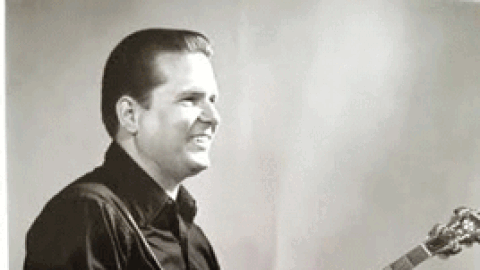 Bluegrass TodayLaura Boosinger focuses on Tom McKinney, banjo innovator in the Scruggs style, traditional singer, and inventor of the renowned McKinney capo.


-
 Laura Boosinger dives into the history of the fiddle tune classic "Soldier's Joy."
 -
Laura Boosinger continues her dive into the pioneers of banjo in North Carolina. This time focusing on the men who still influence banjo players today.
-
Laura Boosinger highlights pioneering women of the banjo in this episode of Down the Road on the Blue Ridge Music Trails podcast.
-
Laura Boosinger features the Steep Canyon Rangers as they celebrate 25 years.
-
 For Laura Boosinger's second installment on the birth of the Banjo she continues her conversation with banjoist, producer, and author Bob Carlin.
 -
Laura Boosinger talks with banjoist, producer, and author Bob Carlin on the origins of the banjo, from its origins in West Africa to the instrument we know today.
-
 In this episode, we dive into the backgrounds of some participants from the original sessions. It was reported that out of 300 applications, only 25 musicians were chosen for the original Asheville Sessions. Listen to learn about two of those musicians: James Dedrick Harris (fiddle) and Ernest Helton (banjo).
 -
 Three luthiers have collaborated to create a guitar, which will be raffled off through LEAF Global Arts at the annual LEAF Festival, taking place from October 16 to 19, 2025. The guitar was crafted from wood harvested from trees that fell during Hurricane Helene.The luthiers:Jayne HendersonKyle Landers Judson RiviereAll proceeds will support the Local Artist ReLEAF Fund, aiding Western North Carolina artists impacted by Hurricane Helene. Learn more at LEAF.org.
 -
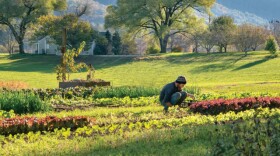 John C Campbell Folk School is celebrating its 100th anniversary of music, dance, craft, agriculture, and foodways. Located in Brasstown, North Carolina, in Clay County in the Far West region of the state. Known for its exemplary selection of courses in handicraft skills, music, agriculture, and more, it is one of the most established folk schools in the United States. Dive into the history of the founder, Olive Dame Campbell, and JCCFS.
 -
 Jim Shumate was a fiddler who gained his notoriety in the 1940s when he played with some of the great musicians of bluegrass, including Bill Monroe & the Bluegrass Boys, Lester Flatt, and Earl Scruggs. He added his flair to the songs of the time, emphasizing ‘long-bow’ fiddling, a style which he discovered listening to Arthur Smith from the Grand Ole Opry.


