

Dylan Henson
Fill-In Host, Morning EditionDylan Henson is a full-time news producer who helps create daily newscasts and contributes to breaking news coverage across the Carolinas. He is also WNCW's part-time Morning Edition host. He hosts WNCW's More to the Story, where he produces long-form reporting and special projects exploring issues affecting Western North Carolina and Upstate South Carolina. A graduate of Appalachian State University with a bachelor's degree in Electronic Media/Broadcasting and a minor in Media Studies, Dylan's interests include investigative journalism, public affairs, and community-focused reporting that goes beyond the headlines.
-
 Two years after Hurricane Helene, the roads are mostly open, and the power is mostly back. But for thousands of families across western North Carolina, recovery still comes down to one question: when do I get to go home?
-
Two Years After Helene, Duke Energy Says It Rebuilt a Smarter Grid — Here's What That Took, and What It Cost.An "electric army" of 23,000 workers from 20 states and Canada restored power to 2.7 million customers after Hurricane Helene. Duke Energy spokesperson Jeff Brooks walked WNCW through the restoration, the technology the company says has already prevented 1.4 million outages this year, and what's still being paid for.
-
Two years ago this month, Hurricane Helene tore through western North Carolina. This 3-part special report, "Higher Ground" we take a look at what broke, what's been rebuilt, and what two years of recovery actually looks like on the ground. In this opening chapter, we go back to the moment it started — inside the room where one county had to decide how to warn a quarter million people that their homes were no longer safe, and to a much smaller town an hour and a half away that came within inches of losing its dam.
-
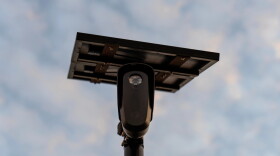 In part one of this series, Asheville Police and the Spartanburg County Sheriff made the case for Flock Safety's license plate reader cameras — narrower in scope than critics suggest, they argued, and already tied to real arrests and recoveries. Part two is the pushback, and it ends with news: this week, Asheville City Council voted 5-2 to rip out every one of the city's 11 Flock cameras and terminate its contract with the company.
-
 This week, Asheville Mayor Esther Manheimer announced she's calling for a vote at Monday's city council meeting to remove all Flock Safety cameras from the city — ending the contract with the company entirely. She says she heard clearly from residents that a moratorium wasn't enough. That announcement is the backdrop for our report. In this More to the Story episode, WNCW's Dylan Henson sat down with two law enforcement officers who use Flock cameras, to hear the case they make for the technology. Chances are you've driven past one without knowing it — a small camera, mounted near a road or parking lot entrance, reading your license plate and logging the time. In the past two years, they've gone up across western North Carolina and the Upstate of South Carolina. Here's part one — with Asheville Police technology supervisor James Wingo and Spartanburg County Sheriff Bill Rhyne.
-
 Part three of WNCW's three-part series on rural healthcare access in western North Carolina
-
 That gap between care and the people who need it is the focus of part two of More to the Story, WNCW's three-part series on rural healthcare access, featuring Sauer and Dr. Susan Mims, CEO of Dogwood Health Trust, the foundation created from the sale of Mission Health.
-
 When something goes wrong in the mountains of western North Carolina, the first call most people make is 911 — and in many communities, the ambulance that answers is the closest thing to healthcare for miles.That reality is the focus of part one of "More to the Story," a three-part WNCW series examining rural healthcare access across the region. The episode features Henderson County EMS Director Mike Barnett, Buncombe County EMS Division Manager Jamie Judd, and Buncombe County Emergency Services Director Van Jones.Part one of WNCW's three-part series on rural healthcare access in western North Carolina


